
The Walt Disney Company is, in practice, a nostalgia enterprise: its contemporary modus operandi, across the bulk of its corporate arms, is to repackage your youth and sell it back to you in a myriad of superficially ‘new’ forms. This isn’t an unexpected or sinister strategy for a behemoth such as Disney to employ given its illustrious century-spanning history, nor is it one unique to the Mouse amidst a broader media landscape that has become increasingly dependent on pre-existing intellectual properties as the basis of fresh content; that said, Disney has been a torchbearer in this recent industry trend as opposed to a lemming, a rather insular entity that, at times, seems too reliant on its past as a means to shape and support its future.
This is a sentiment broadly true across the company’s cacophony of entertainment divisions, perhaps most conspicuously at Walt Disney Pictures, its namesake live-action film studio that has theatrically released just one narrative feature not based on a previously established IP since 2019 (that being 2024’s Young Woman and the Sea, a Daisy Ridley-led biopic of famed swimmer Gertrude Ederle). Disney has produced almost exclusively franchise fodder throughout the past decade, with the vast majority of its high-profile ‘live-action ‘ releases over that stretch being remakes — either direct or tangential — of its cherished animated canon, with the financial returns being varied, at best.
Disney isn’t historically a company willing to take significant risks on properties not developed in-house, but its incessant franchise regurgitation throughout the past 10 to 15 years has caused stagnation; the Mouse, since 2014, has produced 20 live-action films ‘inspired’ by its animated library, with this constant recycling through longstanding IPs largely preventing it from creating anything distinctly new that has resonated with audiences in a meaingful capacity.
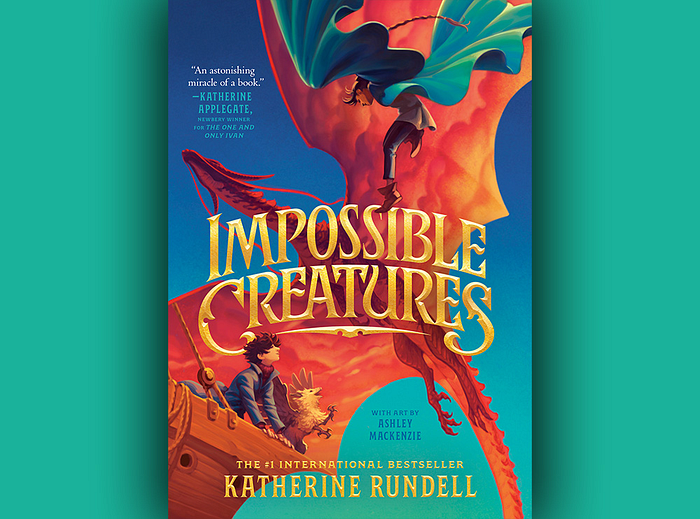
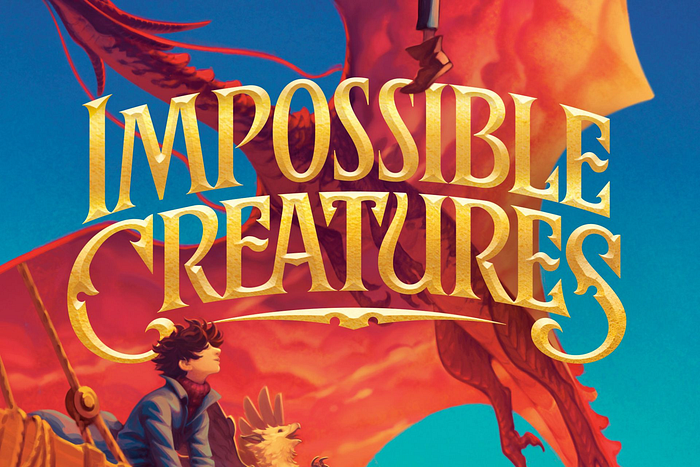
It’s a problem that Disney has identified and is attempting to remedy, most notably (thus far) in the form of a seven-figure deal to acquire the film and ancillary rights to Impossible Creatures, a middle-grade fantasy book series penned by British author Katherine Rundell that has become a phenomenon within its intended demographic. The series, which takes place in a fantastical setting in which every creature of myth and legend (regardless of culture) exists, has become a mainstay across young readers since its 2023 debut, with Disney noting in its October press release that Rundell became “the first U.K. children’s author since [Harry Potter scribe] J.K. Rowling to simultaneously reach the №1 position on the children’s book charts in both the U.K. and the U.S.” when The Poisioned King, the second book in the series, became an “immediate global bestseller” upon its September, 2025 release.
It’s an uncharacteristically risky move for a company that hasn’t made a habit of acquiring properties developed outside of its walls, especially given just how aggressive it was in its pursuit of the rights. Deadline writer Mike Fleming Jr. noted after the deal was brokered that several major studios were interested in bringing Impossible Creatures under their umbrella, with executives from these companies flying to London over the summer to share their pitches with Rundell; the result is a deal that sees the author maintaining significant creative control over her property, with Disney noting that she’ll be “central to the creative vision and development of the franchise” by directly penning the screenplays for the first two films. Her Impossible Films production label has also entered a first-look agreement with Disney, giving the juggernaut the first crack at “all of Rundell’s current and upcoming literary projects.”
It’s an out-of-the-ordinary play for Disney, but it’s one that seems, at least initially, calculated, as its early messaging regarding the prospective franchise is incredibly — and atypically — ambitious. The mere presence of a press release about a rights acquisition on the company’s corporate website is unusual and signals lofty aspirations, especially when said release contains a direct — and immensely complimentary — quote from CEO Bob Iger.
“When I read ‘Impossible Creatures,’ I knew it belonged here at Disney. I was immediately drawn into the vibrant world Katherine imagined and the possibilities of what we could do together with this story. Written by Katherine herself, these movies are in the best of hands with our Walt Disney Studios team, and I can’t wait to see this tale brought to the screen.” — Bob Iger
The world of film development is complex and anything but sequential; despite the company’s early ambition, there’s still a distinct possibility that nothing ultimately materializes from this announcement. That said, Disney’s initial vision for the franchise — and how it could ultimately benefit the larger corporation as a multimedia entity — is bold, as the press release’s verbiage indicates that the Mouse views Impossible Creatures as a potential linchpin brand. To suggest that Disney views the series as its long-sought answer to The Wizarding World is audacious, given that few properties in the history of publishing, cinema, or themed entertainment have ever achieved that level of consistent gargantuan success, but by directly referencing Harry Potter creator J.K. Rowling in its press release, the company isn’t necessarily shying away from the comparison.
At 28 years old with no children, I am in no way a member of Impossible Creatures’ target demographic, despite my well-established love of dragons. I felt compelled, however, to give the first (and, as of now, only) two books in the series a read given my endless fascination with The Walt Disney Company as a leader in both the traditional and themed entertainment industries, as I wanted to discern whether the series that the company is so demonstrably bullish on has the bones of a property capable of having a notable presence across Disney’s Entertainment and Experiences divisions. I’ll dive into that later in this piece, but it’s first important to explore the circumstances that made such a deal a necessity for Disney, as it’s, in some ways, just now trying to remedy a stretch of continued mistakes it made some two decades ago.
Disney’s Continued Search for the ‘Next Harry Potter’
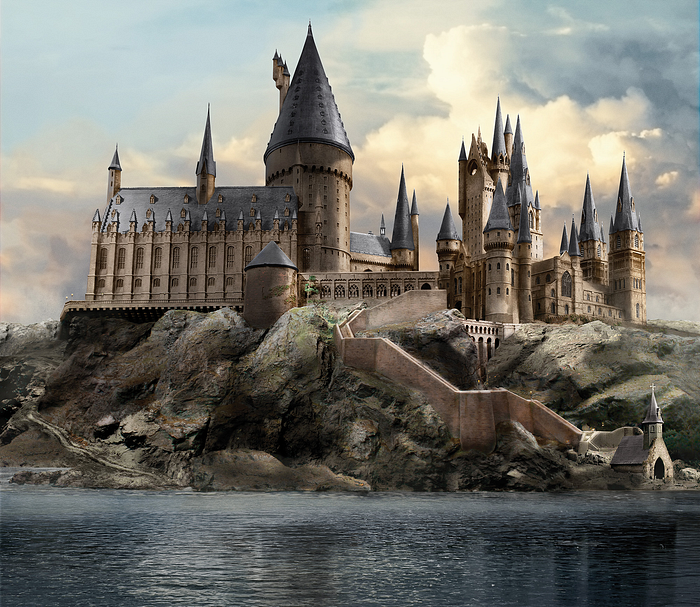
A significant portion of the internet discourse I read following Disney’s acquisition of the Impossible Creatures rights immediately likened the series to Harry Potter, a natural parallel to draw given their shared standing as wildly popular children’s fantasy sagas penned by British authors. And though there’s some conceptual overlap between the two (the presence of magic, mythical creatures, etc.), I find the comparison more fascinating when viewed through the lens of ambition, as Disney is, at least initially, signaling that it views Impossible Creatures as a brand capable of being leveraged across various mediums much in the same way that Warner Bros. (and, through licensing, Universal) deploys Potter.
What makes this notion a bit humorous is that Disney, had it operated with more foresight at various points in the not-so-distant past, wouldn’t have needed to secure its answer to Potter, as it could have had Potter itself. The fantasy series, a seven-book saga that chronicles the childhood of the eponymous boy wizard and his experiences at the Hogwarts School of Witchcraft and Wizardry, is, today, renowned as one of the most influential and cherished publishing feats of all time, a collection of novels that has sold over 600 million copies worldwide while serving as the impetus for a multi-billion-dollar film franchise and some of the most thoroughly immersive themed settings in the world. In the mid-1990s, however, it was but a single book penned by a first-time British author while sitting alongside her daughter in an Edinburgh coffee shop, an impressive, but perhaps unsustainable feat that wasn’t certain to resonate with American audiences.
Harry Potter and the Philosopher’s Stone, the first book in the series, was released by British publishing house Bloomsbury in 1997 and found immediate success, with arrangements quickly being made to find an American publisher. It was at this point that Philosopher’s Stone, per a 2005 article penned by an anonymous former Disney employee, passed the desk of a Disney Publishing executive, who passed on the opportunity to secure the book and introduce ‘the boy who lived’ to domestic audiences. Scholastic, Inc. ultimately acquired Potter’s U.S. publishing rights, with the retitled Harry Potter and the Sorcerer’s Stone hitting American shelves in September of 1998; it would sell over 11 million copies by December of 2001.
Disney would again have an opportunity to set up shop in the Wizarding World in 1998 when Rowling, shortly after the British publication of Harry Potter and the Chamber of Secrets (the second Potter book), began to float the film rights to her, at the time, burgeoning series that had moved over 200,000 copies in the U.K. alone. Disney was among the interested parties but ultimately passed, with Warner Bros. reaching a seven-figure agreement with Rowling in October of 1998 to secure the rights to the first two novels; reasons for why the Mouse, specifically, halted its pursuit have never been disclosed, though a 2011 Deadline article noted that some studios were deterred by the creative input and general oversight Rowling sought (she, for example, mandated an “all-British movie cast” and wanted a say in product licensing). Some parties, per the article, were also hesitant to launch a tentpole franchise given the series’s then-lack of a definitive and satisfying conclusion; the eight-film saga would ultimately earn over $7 billion worldwide, with the final entry (2011’s Harry Potter and The Deathly Hallows Part 2) earning a series-best $1.3 billion — hesitancy, in retrospect, was for naught.
The benefit of hindsight tells us that Disney should have jumped at one of, if not both, of these opportunities: you, too, would’ve bought a lottery ticket had you known the winning numbers beforehand. That said, the company wasn’t the only American publisher to pass on, what was then, a single popular British children’s novel, nor was it the only major studio to balk at the idea of paying seven figures for a property it wouldn’t have sole control over; you can criticize the lack of foresight, but you can’t necessarily scrutinize the thought process. It’s difficult to offer this level of forgiveness to the Mouse, however, for what is perhaps its most significant whiff on the Potter franchise, a seismic blunder the aftershocks of which are still being felt today.
The Potter phenomenon maintained fervor well into the new century; boasting five books and three films by 2004, it was becoming evident that the franchise was not a fad, but instead a contemporary genre hallmark that had become enshrined in the zeitgeist and wasn’t going to fade into obscurity anytime soon. Fans had not only fallen in love with the whimsy of the setting and its characters and concepts, but with the setting itself — enthusiasts wanted to see Hogwarts for themselves in a tangible form, to walk the streets of Diagon Alley, to jump on a broomstick and take part in a genuine Quidditch match. As the industry leader in themed entertainment and the construction of large-scale immersive settings, Disney seemed like a natural home for a Potter-themed area or attraction, a place where fans could congregate and actually experience the world with which they had fallen in love on page and screen.
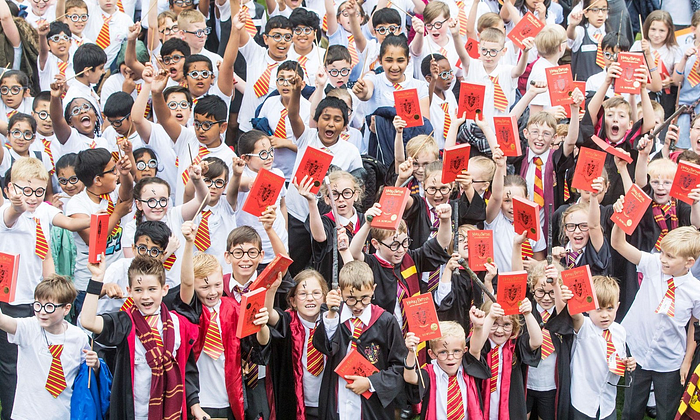
Rowling and Warner Bros. — initially — agreed, inking a letter of intent to license the property’s theme park rights to Disney in 2004. Thus commenced a conceptualization period in which Walt Disney Imagineering thought of ways to introduce the Wizarding World into the company’s parks, ultimately pitching a rather small-scale addition to Fantasyland that, per Disney historian Jim Hill, would have included a Buzz Lightyear-like Omnimover ride, a “Magical Creatures Petting Zoo,” and a restaurant with light Potter theming. Rowling, who continued to mandate a significant level of creative oversight, viewed the plans as rather unambitious, also opposing Disney’s “insistence on including outside brands like Coca-Cola and merchandise in the land’s gift shops,” per AllEars. The two parties ultimately failed to reach a shared vision, with Rowling, in turn, taking the franchise to Disney’s preeminent competitor in the theme park space.
Universal, in the mid-aughts, was a notable player in the themed entertainment industry, but was still a distant second to Disney; to use a potentially niche sports reference, there was a competition between the two in the sense that the Buffalo Sabres technically compete for the Stanley Cup each season. Nationwide theme park attendance numbers from 2005 paint an effective picture of the state of the broader rivalry throughout the era: all four Walt Disney World parks ranked in the top five in and saw year-over-year attendance growths between 5-and-7%, while Universal’s competing Orlando parks — Universal Studios Florida and Islands of Adventure — ranked at №6 and №8, respectively, each falling by 8.5%. Universal’s Orlando property was an impressive accomplishment with a population of devoted fans and some genuinely innovative attractions, but it wasn’t competing with Disney in any real capacity; people weren’t necessarily going to Orlando for Universal — they were going to Universal while they were already in Orlando.
The company knew it needed a Potter-level franchise in order to strengthen its standing in the themed entertainment industry, and it was, thus, more willing to yield to Rowling’s demands than its more established competitor. The author denied Universal Creative’s initial pitch (which amounted to a light retheme of Islands of Adventure’s Lost Continent area) and urged for more ambition; the result was The Wizarding World of Harry Potter — Hogsmeade, a thoroughly enthralling themed setting that not only fundamentally altered contemporary theme park design, but would catalyze Universal into becoming the genuine Disney competitor it long aspired to be.
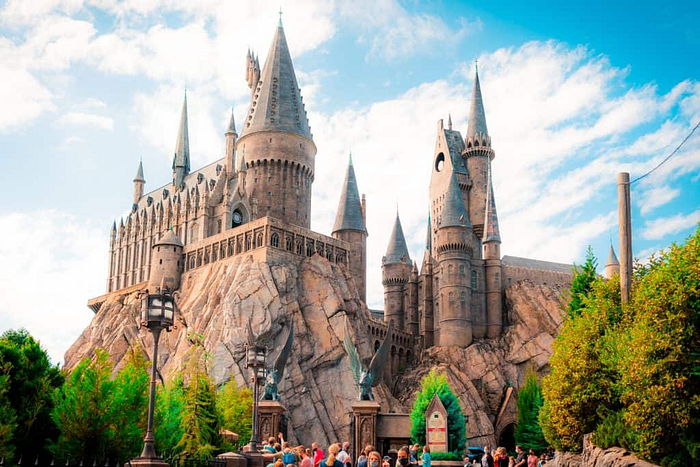
Countless articles have been written about the quality of Universal’s Harry Potter lands (with good reason), but their impact on park attendance is the information most pertinent to this piece; a 2018 Forbes article noted that Islands of Adventure’s attendance had increased by 64.5% since Hogsmeade’s 2010 opening, making it, at the time, the world’s fastest-growing theme park. Its unequivocal success prompted the company to build additional Hogsmeades at its Hollywood, Osaka, and Beijing parks (it was an opening day offering in Beijing) and another Potter land in Orlando in the form of Universal Studios Florida’s Diagon Alley; Harry Potter-themed settings across the globe, per Forbes, sparked an average attendance surge of 32% in the year following their opening, finally giving Universal an experience that made it a vacation destination as opposed to a tack-on.
And these lands, in addition to increasing general interest in Universal, demonstrated that the company was capable of building entire lands of a similar, if not greater, quality than Disney, making the entity a genuine competitor to the Mouse as opposed to a relative afterthought. Disney is still the industry leader both domestically and worldwide, but the gap is much smaller now than it was some 15 years ago, with Universal taking an uber-aggressive step to further shrink the margin in 2025 with the opening of Epic Universe, its third traditional Orlando gate (which, as you may expect, itself contains a Harry Potter-themed land).
Disney quite literally had the Harry Potter theme park rights in its hands, with its comparative lack of ambition directly leading to the burgeoning of its foremost competitor.
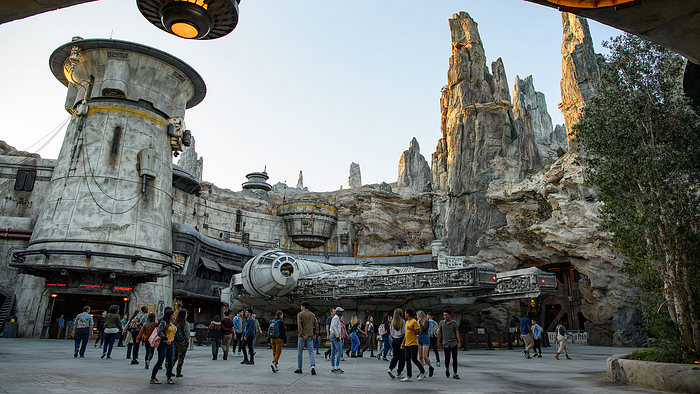
And Disney’s comprehensive search for its ‘answer’ to Potter — as both a film franchise and theme park entity — has been a constant that has permeated the company throughout the past two decades. The property’s theatrical success directly led to Disney adapting the first two books in the cherished Chronicles of Narnia young-adult fantasy series in the mid-aughts, with neither 2005’s The Lion, The Witch, and The Wardrobe nor 2008’s Prince Caspian topping the worldwide gross of any single mainline Potter film. One could argue that The Wizarding World’s success played a role in Disney’s acquisition of both Marvel Entertainment and Lucasfilm in 2009 and 2012, respectively, giving the company direct control over mainstream brands that it could leverage across its various corporate forms. The construction of themed settings like Pandora — The World of Avatar and Star Wars: Galaxy’s Edge at Walt Disney World is not only a direct response to Universal in terms of reclaiming market share, but these settings also employ the convention of centering an entire land around a single IP that was popularized by the competition’s Potter areas.
A lack of new material and Rowling’s sullying of her reputation with harmful rhetoric seem to have caused a general decline in Potter interest, but Disney’s search for a comparable franchise hasn’t slowed, nor will it as long as competitors continue to profit off of the IP. Impossible Creatures is as direct a Potter response as the company has made in recent years, and it seems like a rather calculated bet given the properties’ parallels; though few book series have ever reached the publication heights of Harry Potter, Impossible Creatures has captured that same demographic in a similar capacity, to the point that there were book release parties upon the second entry’s release.
Disney’s acquisition of the Impossible Creatures rights, in many ways, mirrors its past pursuit of the Potter rights, only this time using the mistakes made and lessons learned from that chase as motivation not to let history repeat itself. The circumstances are eerily similar: a young British author was selling the film rights to her best-selling children’s fantasy series, seeking in the agreement a seven-figure sum and significant creative input. Whereas the Disney of yesterday balked, the Disney of today played ball, not letting a property with demonstrated appeal and obvious film and theme park potential again fall into the hands of a competitor.
Disney’s Desperate Need for Fresh Live-Action IPs
And playing a significant role in Disney’s willingness to concede on points it generally wouldn’t — and desire to acquire the rights to an outside property, at all — is the company’s contemporary need for new live-action IPs.
To say that Disney is entirely unwilling to produce films not at least tangentially connected to an established brand is disingenuous, as there are original features constantly in development at Walt Disney Animation Studios, Pixar, and Searchlight. That said, the bulk of its recent live-action fare has been almost entirely franchise-centric, with Marvel and Lucasfilm inherently being IP factories, 20th Century leaning on properties like Avatar, Alien, and Predator, and Disney proper becoming infatuated with adaptations of the company’s animated classics.
There’s nothing fundamentally wrong with an entertainment enterprise producing franchise or IP-based content, as sequels and remakes have existed for roughly as long as cinema has been an artistic medium. Where Disney’s modern issue lies is in the balance, as its original output has been almost non-existent over the past decade; Walt Disney Pictures has theatrically released only nine live-action films not directly based on, following up, rebooting, or in some other way capitalizing on a previously released movie since 2015, with seven of these hitting theaters between 2015 and 2018.
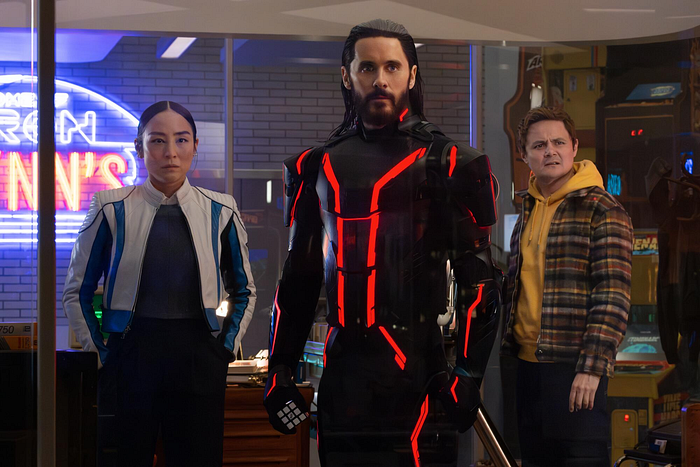
This is an issue present, to varying degrees, across all of the company’s live-action arms, as this over-reliance on established brands has prevented the Mouse from developing any fresh properties that have captivated general audiences in a significant way. This insular strategy is inherently self-defeating: by almost exclusively regurgitating to your audience properties they’re already familiar with, you’re impeding yourself from creating anything new while simultaneously exhausting your library of cherished brands. You’ll eventually have depleted the reserves before realizing you haven’t crafted anything fresh of note, essentially leaving you with nothing.
And Disney has seemingly realized that this is the road down which it’s heading, recently prioritizing ‘original’ projects at its non-Marvel and Lucasfilm live-action divisions (original, in this context, referring to both wholly new concepts and properties with no prior adaptations). 20th Century Studios has become the company’s home for large-scale “original filmmaking” with “A-list talent,” over the past year acquiring an Edward Berger-helmed sci-fi project starring Austin Butler, a Dwayne Johnson-led crime picture directed by Martin Scorsese, and Leonardo DiCaprio’s long-gestating The Devil in the White City adaptation, among several other highly touted spec scripts.
This ideological shift at 20th seems to come at the behest of David Greenbaum, a former Searchlight executive who took over as President of Disney Live Action in February of 2024. A recent report from Variety indicates that he’s now transposing this initiative onto Walt Disney Pictures proper, as the outlet noted in late August that the Mouse is urgently “seeking new IP and pitches” aimed at younger viewers (particularly males), prioritizing “splashy global adventures and treasure hunts, as well as seasonal fare like films for the Halloween corridor.”
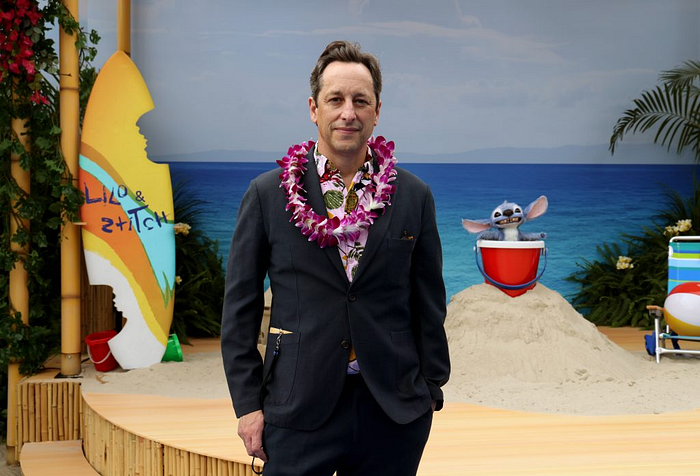
Disney, organizationally speaking, seems to have rediscovered the value in the theatrical window; after years of investing billions of dollars into direct-to-streaming content, the company has recently reworked two of its higher-profile Disney+ efforts — an animated Moana series and live-action Lilo & Stitch remake — into theatrical features, with each earning over $1 billion at the worldwide box office. After an extended period of relative creative stagnancy, the entity again seems interested in telling new stories with theatrical appeal to its audience as opposed to reiterating them; it, in other words, seems committed to adding to its legacy instead of recycling through it.
Disney’s acquisition of the Impossible Creatures rights is our most tangible evidence yet of the company’s newfound willingness to take risks on untested ideas, a microcosm and indicator of a broader initiative that the entity hopes will propel it out of the self-reliant rut it’s recently found itself in. The Mouse is now not only open to exploring, but actively seeking fresh ideas it can build into beloved franchises as opposed to solely relying on brands with which people are already familiar; Impossible Creatures doesn’t check every single aesthetic or narrative box Variety outlined in its August report, but it boasts the qualities and sensibilities that have become intrinsically linked with Disney over the past century, making the company’s recent risk on the property feel measured.
The Viability of ‘Impossible Creatures’ as a Tentpole Franchise
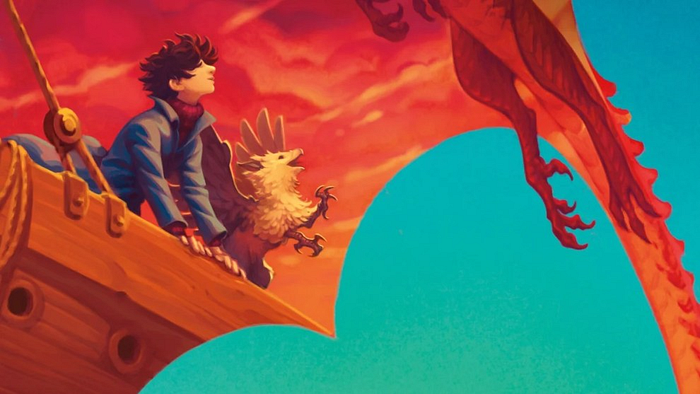
The world has a tendency to make individuals grow more cynical and jaded as they age; that ‘inner-child’ within all of us slowly evaporates as we’re presented with more of life’s harsh realities, and the whole experience loses some of its inherent wonder and whimsy as you try to discover your place within the larger complex. This idea (apologies if it sounded depressing) is the entire foundation on which entertainment is founded: it’s escapism, with fantasy media, in particular, being a means through which to use your imagination and immerse yourself in an otherworldly setting where the realities of this one don’t apply.
I, as an almost 30-year-old man whose knee makes an arthritic sound every time I bend it, do not often find myself wholly transported to or thoroughly enthralled with the fictional settings with which I engage — and that’s fine, as that’s not necessarily a fair or realistic expectation to have of every piece of media. That said, I deeply love that feeling of immersion, that sensation of being in a distinct world completely disparate from our own; it’s why I enjoy themed entertainment as much as I do, as it’s, in my opinion, the most authentic and tangible form of immersion that any artistic medium can offer.
That said, there are a few literary series that have achieved a similar level of absorption within me, that have made me feel as though I was residing in a different world as opposed to reading words on a page. It’s a scant list occupied only by some of the fantasy genre’s hallmarks, and after reading the first two books in the series, I can confidently add Impossible Creatures to that record.
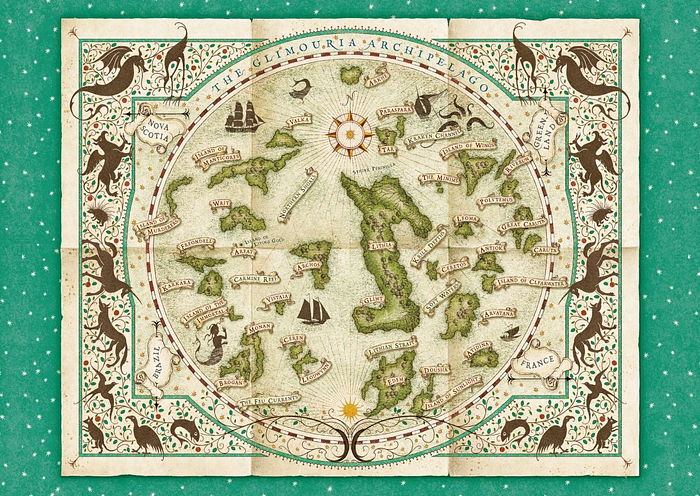
Is it embarrassing that I found such awe in a series intended for middle-grade readers? Perhaps, but I also think it’s a testament to Rundell and her ability to brilliantly paint such a boundless and enthralling world as to wholly immerse not only young people, but also someone who pays taxes. The books are primarily set in the imaginative Glimouria Archipelago, a series of 34 islands hidden from the rest of the world, accessible only through a small number of passageways scattered across the globe. The islands are the Earth’s sole remaining place where ancient magic still exists, and every mythical creature — from your fantasy mainstays like dragons and griffins to lesser-known legends like the Arabic al-mi’raj and Persian karkadann — still roams.
The setting, to me, was the element of paramount importance as I commenced my readthrough, as it’s why Disney spent seven figures to bring Impossible Creatures under its umbrella. The world in which a piece of fiction takes place is rarely dispositive to its success, but it’s a critical auxiliary aspect; Disney has built an empire out of telling engaging stories in captivating fictional worlds in which people simply want to spend time, and I felt as though this property’s propsects as a multimedia behemoth would come down to the strength of its setting. Elements like character arcs, motivations, and even entire plot points can be tweaked in the transition from page to screen, but none of these aspects really matter if the world itself is lackluster.
And while the books themselves are far from flawless, the world is as immersive as I’ve encountered — in any medium — in quite some time. It’s an inherently ambitious setting; in addition to each of the Archipelago’s 34 islands having the capacity to have their own cultures, traditions, and customs, there’s a limitless — and potentially intimidating — potential in the mere idea of every fantastical creature the world has ever conceived existing in a single area. Rundell takes a maximalist approach to her world in the first book (simply titled Impossible Creatures), taking us on an expansive adventure across several islands to introduce us to creatures and concepts that make the setting feel truly singular; she layers in several elements that, in addition to giving the world character, will translate brilliantly to screen, among them a staggering tree through which the world’s magic flows, a Senate building carried, in flight, by longmas, and countless fantastical creatures who augment both the story and world in various ways. In a setting that has the potential to veer into a shallow amalgamation of myths, Rundell sews in enough of her own ideas to make it feel truly unique.
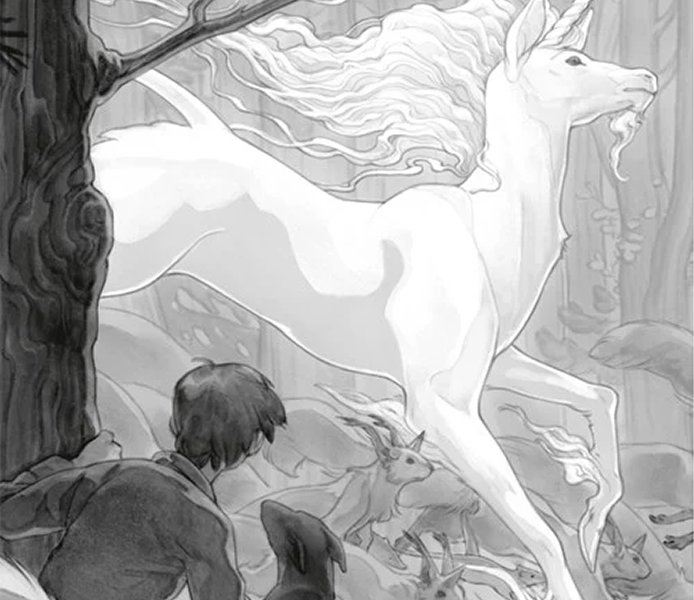
The saga’s other elements, at least initially, are not as strong as its setting, which itself feels underdeveloped, at times, given the breakneck pace of the first book. The initial entry follows central protagonists Christopher, a young boy from England who quickly learns that guarding the Archipelago is his family’s trade, and Mal, a rather independent Archipelago native whom residents sense a peculiarity about; they quickly encounter quasi-pirate Fidens Nighthand and academic Irian Guinne, with whom they embark on a rip-roaring, primarily sea-faring adventure that introduces us to the tentpoles of Rundell’s world. While the setting is imaginative and enthralling, the pace at which we explore it is jarring, at times feeling aimless and unfocused. The lack of robust characters accentuates this issue: though the supporting cast is fleshed out, our primary protagonists seem rather ill-defined and too often fall to the whims of the plot. I feel this is a sentiment particularly true of Christopher, who, while a bright-eyed, charming conduit through which we, too, experience the world for the first time, too often comes off as a husk, as though he doesn’t have any notable discerning qualities to make him a true character.
Rundell eliminates this criticism in The Poisoned King, a follow-up in which she offers a much more authoritative voice and demonstrates a greater command of her setting. She takes time to establish the nuances of individual areas while still maintaining the whimsy and wonder of the larger world, accomplishing this through the introduction of Anya, a young princess who discovers a plot against her family and must fight to thwart it before it’s too late. Anya, who takes the reins as our primary protagonist in this entry, is immediately a clearer and more well-defined character than Christopher, with her arc being genuinely engaging to follow throughout. She ultimately coalesces with our returning cast of characters and augments their dynamic, making for a more focused sequel that adds depth to (and, thus, expands) the world by being smaller in scope.
And it’s Rundell’s marked growth between novels that gives me confidence in not only Impossible Creatures’ blockbuster film aspirations, but in her being the one adapting these books for the screen. The first entry, while again immersive and surprisingly emotional in its own right, reads as though it’s from an author who was still figuring out her creation as she progressed; these issues are almost entirely absent from The Poisoned King, as she now seems to have a greater understanding of and belief in the setting she’s crafted. Her penning the screenplays for both adaptations will give her the opportunity to realize, on screen, the vibrant and imaginative world she herself conceptualized while giving her a chance to revisit the first novel with more authority, perhaps allowing her to flesh out her characters in a more satisfying way.
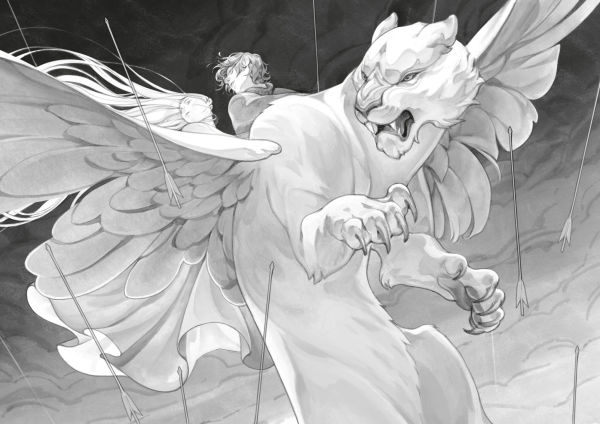
There are countless sequences throughout each book that are cinematic in scope, to the point that you can easily envision them on an IMAX screen against a Michael Giacchino or John Powell score. The conceit of the setting inherently lends itself well to film, as there’s something eternally alluring about seeing mythical creatures — whether they be dragons, unicorns, or kraken — realized on the biggest screen possible. There’s immense visual potential, but the saga’s heart, thus far, lies in its themes, which are congruent with what one would expect from a Disney family blockbuster; the first book touches on themes of responsibility, the capability of children, and the intrinsic value of humanity and the world while also communicating a throughline environmentalist message, while the second entry explores the self-rotting nature of revenge. To echo the sentiment of Bob Iger’s quote, Impossible Creatures — through its setting and themes — screams Disney, and should the company be diligent in its execution, it has the potential to be a film franchise that enthralls audiences for generations to come.
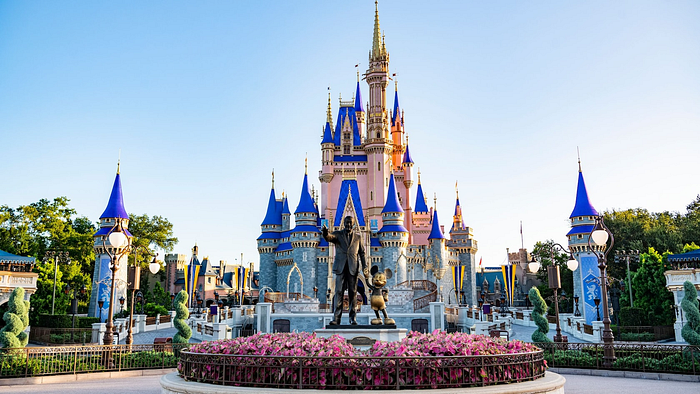
And the Mouse is showing initial diligence by allowing Rundell to adapt her own texts, an auspicious approach given its seven-figure investment. With several literary sequels and spin-offs planned, there’s room for Impossible Creatures to become a pillar multimedia franchise for Disney, with its theme parks being a natural future landing spot. There’s something inherently riveting about seeing animals with your own eyes and interacting with them in quasi-natural environments — Disney, itself, has centered an entire theme park around this idea. This universal appeal envelops the fantastical, with the Glimouria Archipelago, in this regard, seeming an obvious setting for eventual theme park representation given its breadth of mythical creatures. The conceit of the world provides Walt Disney Imagineering with endless possibilities for immersive experiences, ranging in ambition and scale from a Fantasyland-style dark ride (that could actually be a thematic fit in Fantasyland) to an entire land boasting innovative E-tickets, retail with adoptable gaganas, and a themed restaurant serving berry cordial and Pantherfruit wine. The world, on page, is one that readers can’t help but want to visit, and if Disney can realize its potential on screen, its Parks representation seems inevitable.
This, admittedly, is putting the cart well before the horse, as Disney must first craft a feature that both captures the emotional and visual essence of the series while also turning a (likely substantial) profit. Tapping Rundell to pen the screenplays is a strong start, but the Mouse must now identify a director capable of translating that vision to the screen. Dean DeBlois, known to Disney fans as the co-director of 2002’s Lilo & Stitch, would be my choice, as both his animated and live-action How to Train Your Dragon films ooze a sense of wonder and heart similar to that of Impossible Creatures. Paul King, the director of Wonka and the first two Paddington films, would also be a great nod, as his films have an emotional core and visual whimsy in line with Rundell’s creation; King also has a current working relationship with the Mouse, as he’s developing a Prince Charming movie with Chris Hemsworth attached to star. Raine Allen-Miller would be a strong pick should Disney choose to go with a relative unknown, as Rye Lane, her criminally underrated debut feature, was as emotional and heartfelt a film as I’ve seen in some time, and I feel that poignancy would translate well to this world; to find breadcrumbs where almost certainly none exist, Searchlight distributed Rye Lane while Greenbaum was still overseeing the company.
To posit that Impossible Creatures has the potential to be Disney’s long-sought answer to Harry Potter would be naive, as few franchises in the history of media have been as successful as the Wizarding World; it’s the best-selling book series of all time and the seventh-highest-grossing film franchise in the medium’s history — to use it as a benchmark for any new IP is a failing proposition. That said, Impossible Creatures is a series conceptually, tonally, and thematically harmonious with what audiences expect from Disney, and the setting is one ripe for exploration in both traditional and themed entertainment. It will be several years before we see the Glimouria Archipelago realized on screen (if we ever see it at all) and even longer before we see any Parks representation manifest, but in the interim, it’s encouraging to see Disney take risks on fresh ideas and stories as opposed to slapping a new coat of paint on a classic with demonstrated audience appeal.
Stagnancy prevents growth, and by being creatively insular throughout the past decade, Disney has inhibited itself from creating any new worthwhile franchises capable of joining the ranks of some of its cherished classics. The company seems to finally be shedding this misguided M.O., and Impossible Creatures is a strong first step.
Be sure to continue to follow Boardwalk Times for more coverage of The Walt Disney Company.
Support Boardwalk Times on Ko-Fi.
Support Boardwalk Times by shopping on Boardwalk Store:
If you like this article. Subscribe to my free newsletter Boardwalk Times: Stories from the Seashore, a monthly dose of Disney, its businesses, and the wider themed entertainment industry.
Kyle Silagyi is a columnist for the Boardwalk Times