
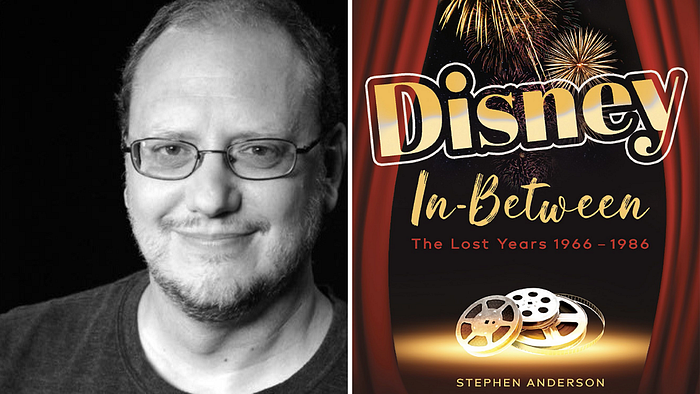
This interview has been edited for length and clarity.You can buy Stephen’s book here.
The period in which your book takes place is after Walt Disney’s death, and it covers the first 20 years where he’s not at the helm. The book takes majority before the arrival of (Michael) Eisner, (Frank) Wells, and (Jeffrey) Katzenberg. I know towards the end you get their first two years in there, but what inspired you to write a book about this time period in Disney’s history?
Well, I have two answers to that question.
Number one, this was the Disney of my childhood. I was born in 1970, so I missed the first couple of years of the 20 years that I covered in the book. But the seventies and early eighties, that was my Disney. I loved the films of the Walt era of course, and grew up with those and was really inspired by them. But I also was excited for New Disney. I wanted new Disney movies, animated, live-action. And these were the movies that were my Disney. So I have a huge affinity, and nostalgia love for this period and these films, despite not all of them being great movies or being successful movies. I just love them all.
But then also having read so many Disney books over the years — Disney history books — it was very clear to me that this time period is typically skipped over in the history books. Obviously, they talk about Walt, they talk about his passing. They might hit a few movies in this time period, maybe they talk about The Black Hole or Bedknobs and Broomsticks, maybe Pete’s Dragon, maybe Fox in the Hound, Black Cauldron and Tron.
But then they kind of fast forward to, when Eisner, and Katzenberg come in, and then we get Who Framed Roger Rabbit, The Little Mermaid, The Lion King, and on and on. And so I felt like this time period, this sort of 20 year era here, this really untapped in terms of exploring the history of what went on in the studio at this time. So I felt it was a story that needed to be told.
It definitely was a story that needed to be told because it helps kind of fill in some gaps. Obviously it’s like pre-Renaissance, pre-Eisner & Wells, and just after Walt’s death. A lot of Ron Miller. Great Ron Miller moments throughout this book as well. But how long was this journey in writing this book? Because it’s definitely a beast of a book.
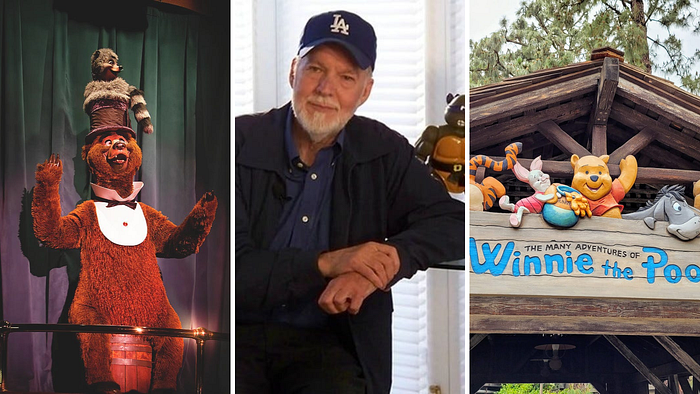
Yeah, yeah, it is a beast or I tell people it’s very meaty. It’s like eating a big giant steak for dinner. So I mean, I’ve kind of always had aspirations to do something about this period for quite a long time, but I didn’t really kick myself into gear until 2010. That’s when I conducted the very first interview with Disney Legend, Burny Mattinson. At the time I was directing 2011’s Winnie the Pooh. Burny was on our story team and sat right next to me in all of our story meetings, which was kind of a pinch-me moment for me. But I thought, well if I want to do this, I can start. Because not only is Burny right here, but I know all these other folks too in the studio, Ron Clements and John Musker, Chris Buck, Mike Giaimo, and Mike Gabriel and I had, they were all there and I thought, well, I’ll just start with them.
I think I didn’t start actually writing until 2020-ish when we were all locked in, locked down. And I thought I’m just going to write this stinking thing once and for all. I’m here at home and I’ve got nothing else to do, so I’m going to start writing. So probably the writing process took, I don’t know, two-ish years and then some refinement after and then looking for a publisher and ended up getting all that stuff together.
And during your research process, what was the most shocking thing you discovered?
There’s a lot. I mean, there are little weird kinds of Disney cultural things. Like for example, Burny was telling me about how when he first started at the studio in the fifties, how prominent smoking was in the animation building. He said you could walk in the front door and look down the hallway and you would just see this layer of haze of smoke hovering at the ceiling of the hallway. That’s not super shocking. But for some reason, to me, I just thought, well, I knew Walt smoked and I figured they smoked cigarettes, but I didn’t think it was that big of a thing.
I think also I know about the Don Bluth tension that had happened in the mid to late seventies with some of the other animation folks and how that ultimately led to him leaving in 1979 to go make The Secret of NIMH with his group of artists. But I guess I didn’t really realize to what extent, how aggressive it actually got. And I talk about that in the book, that there was just these different, and not only Bluth and essentially the folks from CalArts, like the young arts animators that were coming in but then there was also friction with the leadership of the movies, which were kind of older guard people, these two guys named Art Stevens and Ted Berman, who were directing at the time, directing The Fox and The Hound and then ultimately directed The Black Cauldron.
Those movies were filled with so much tension as well because there was this triangle of agitation between Bluth, those directors, the CalArts folks, and then those who sympathize with them. And it was like this fight for the soul of Disney animation. Everybody had their own very specific opinions about what Disney animation should be, even down to animation techniques. He doesn’t use this type of technique. They only use this type of technique that’s very inside baseball. So I won’t get into it too much, but I was just surprised too, it was at such a ground-level war between everybody just to determine what is Disney animation going to be going forward in this era without Walt. So I just didn’t realize that there was so much it built to such a head during that time period.
I have to agree with you on the Don Bluth thing because there are moments, I think during my notes, I wrote down Don Bluth’s name I think 15 times because there are 15 different moments in your book where my jaw kind of drops because it’s like in this day and age, you couldn’t really imagine anyone actually doing a personal project on a company’s dime, similar to how he did or how he had his own kind of crew and stuff in there. But I think one of the key Don Bluth things that I thought was very interesting was Ron Miller at one point viewed him as the person to eventually take over Disney Animation.
Yeah, he was the guy, he was the anointed one basically to run the whole department after. At the time, Woolie Reitherman, one of the nine old men was running the department, and then Don Bluth would sort of be Woolie’s successor. And when Woolie stepped down, eventually retired or whatever he would’ve done, Don Bluth would’ve stepped into that role and he would’ve ran Disney Animation. And a lot of people on the non-blood side of the battlefield certainly had a lot of animosity towards him because in their minds, he was more out for his own interests. And even though he, loved Disney and Disney Animation and was being groomed to be the successor, ultimately he wanted to go off and do his own thing. He was much more of an individual in terms of how he saw animation, how he saw filmmaking, and what he wanted to do with things. Back then, and I would even say today, Disney is not necessarily a place, where you can be an individual. As a director, you’re making a Disney film.
It’s not your movie at the end of the day.
You have your own really specific ideas, you should do it independently. So to be fair to Don Bluth, I think he did the right thing, which was rather than stay here and take over the studio, and who knows how that would’ve gotten just ripped apart from the inside with all the animosity that was going on. He just said I’m going to excuse myself and go do my own thing now. That was so unheard of back then that it caused such a controversy. Funny to think that today people are leaving and coming and going at Disney all the time.
Animation startups are everywhere.
These days. Yeah, exactly. So I think it was such a shock because it was just so unheard of nobody left Disney, everybody wanted to get into Disney, and you stayed there for the long haul. So I think that’s why it shocked people, but again, in a weird way, I know it caused a lot of pain and suffering at the time, but I think he did the right thing because I don’t think there was any other way through it other than him to leave.
I think his exit does kind of spur the Disney Renaissance though in a way. And I think that’s something, and I don’t know, did you notice this while you were writing your book? How many alternate history scenarios that would pop up? I don’t know if you noticed it, but for me, as I read the book, it’s like you’re reading about Tim Burton, John Lasseter, Brad Bird, Jerry Rees, Mark Henn, Chris Buck, all these people who go on to have such storied animation and filmmaking careers, and I just think about, it’s like one different move and the course of animation and filmmaking history changes.
If Don Bluth doesn’t leave and stays and takes over Disney, what happens? What does that look like? Disney decides to invest in computer animation and not let John Lasseter go, and therefore he does not go off and start Pixar and create this whole amazing body of work. Maybe he does it all at Disney?
Does computer animation take over and 2D animation go away like it did for a while? Or do they keep running parallel at Disney? If John stays and Disney starts doing computer animation back in the eighties, who knows? But yes, you’re absolutely right. It’s like Back to the Future Part II, and Doc Brown’s writing on the chalkboard and talking about all these alternate timelines that split off.
It’s fascinating to think, gosh, how different the future would’ve been, but I’ve always thought it was interesting that between Bluth, Lasseter, and Katzenberg, they’re all three people that left Disney and started their own studio, which led to big-time competition for Disney Animation, and that raised the game each time.
Bluth raised the game, Pixar raised the game after John left Disney, and when Katzenberg started DreamWorks that raised the game as well. So you have to have those things. Disney had no competition through most of this time. So it’s easy to stagnate, it’s easy to just get complacent and think, yeah, we’re Disney. We got the best in the business. We got the name Disney on our movies. We’re indestructible. But that’s not the case. You have to have that balance.
Definitely do. And it’s like the Tim Burton thing also is just crazy to read about because I’m like, throughout your whole book, it’s like you kind of check in on him. It’s like he’s an animator. They’re pitching like, oh, what if he did work on Black Cauldron? It’s like by the end of the book he’s doing Frankenweenie, which is a live-action short, and you’re just like, wow, this is such an interesting dynamic at play. I’m like, just a little switch and it’s all different!
Going back to that notion of what we were talking about with Bluth being an individual, sort of being an auteur on his own. The flip side is, wow, for quite a few years there, Tim Burton got kind of carte blanche to just make a lot of really unique, interesting, very non-Disney things under the Disney banner between Vincent and Frankenweenie.
I don’t know if you’ve ever seen the Hansel and Gretel TV show that he did for the Disney Channel. It’s super weird. I think it might be on YouTube. It’s worth looking it up. It’s really weird and extremely not Disney, but wow, to think that a place like Disney for a while there actually fostered a unique individual voice, a filmmaker that has such a vision outside that was really, there’s a spirit of Disney in it, but it was not Disney of the time period. The fact that he had a lab to work in on the Disney lot is also very fascinating and unusual. That would never happen. Now you would never get that kind of carte blanche.
Throughout your interviews with different people doing research, were there any heartwarming moments or any moments that stuck out while you were interviewing a certain person?
My heart was warm just talking to a lot of these people because again, more pinch-me moments, interviewing the man named Sean Marshall who played Pete in Pete’s Dragon, that was like, oh my gosh, I’m on the phone with Pete! Charles Martin Smith, who’s an actor who was in Never Cry Wolf. I love that film. I love Charles Martin Smith. He was all throughout my childhood and movies and TV shows. Talking to him was great.
There’s one moment that I actually thought was a little bittersweet, and I got the chance to interview one of the screenwriters of The Black Hole, which was a very interesting film and very pivotal film for this time period. And he seemed very, I could tell there was a lot of sadness in him as he talked about the film, because he had put a lot in the script that had gotten cut out. There were some director changes on the project, he got along with one director but the replacement director didn’t get along well with him.
There were some moments in the interview where his voice got really sad sounding, and I was sorry to hear that because you just hate to hear that, you want everybody to, regardless of how the movies turn out, you want experiences at least to be positive. And it sounds like it was a little frustrating for him, but I dunno, sorry that one stuck out to me for some reason when you asked me that question. My heart really went out to him at that moment.
And there’s a lot of, during this time period, I would say there’s these unsung heroes of this era, and your book explores it quite well, just like these people that are probably very under-appreciated in Disney history. Who do you think deserves a bit more credit and shaping Disney?
I would say a man named Tom Wilhite.
He came to the studio and I believe it was 1975 to run the publicity department, and then a few years later, Ron Miller promoted him to VP of production. So essentially Tom ran the studio right under Ron Miller and it was Tom’s job to find projects and bring in directors, and essentially was charged with getting live-action back up on its feet, because at the time, live-action was really in trouble. Tom was responsible for starting to steer the monolithic ship that is Disney in the direction of pushing the envelope a bit more. It was Tom who brought in Tron. When Tron was pitched as an animated film he was the one that suggested doing it in live-action.
Tom was the one who came up with Touchstone Pictures and brought in Splash to be the first film of the Touchstone banner. Now, Ron Miller was also part of that, but it was Tom who spearheaded this idea that we’re going to create this new label so we can make films that appeal to an older audience, but that can still be Disney.
Unfortunately, Tom, it took a while to change the studio. At that time that was so ingrained in the way things used to be. It wasn’t going to happen overnight. So Tom did a lot of great work to do that, but unfortunately, it wasn’t quick enough and he ended up being replaced, that’s when Eisner and Katzenberg came in, and interestingly enough, they get credit for Touchstone and Splash, but it wasn’t them, it was Tom, but they took it and exploited it like crazy. They took the Touchstone banner and it exploded in the mid to late eighties and then through the nineties, and then it continued to create more labels like Hollywood Pictures, and they bought Miramax and continued to do that. But it was Tom who really set that foundation, and it was Tom who gave Tim Burton the time and the money and the space to do Vincent and Frankenweenie, and who invested in his talent.
It was Tom who saw the potential in what John Lasseter wanted to do with computer animation and tried to push doing this film called The Brave Little Toaster in CG at Disney, which didn’t end up actually happening, but Tom was the one that saw all these potential in things that could be new and that could be different, and that could be exciting. That forward-thinking mentality that Walt had that had sort of died out a bit throughout the seventies. Tom was the one that picked that torch back up and said, no, let’s think ahead. Let’s think about new things. Let’s think about different things. Again, unfortunately, it wasn’t fast enough for the Disney board and he was replaced, but I think he deserves a lot of credit for turning things around.
He definitely does. I didn’t realize Splash was even in development pre-Eisner, Katzenberg, Wells, because when Disney history is spoken about or when you learn about it through documentaries, they always start with Eisner and Touchstone and Splash. They make it seem like Ron Miller, and obviously Tom Wilhite had nothing to do with it. There was a couple moments in your book where I was like, oh, that’s fascinating. I didn’t realize it also was creating that whole like, oh, well, what if Ron Miller got more time? Or what if that ship turned around? Because there was another kind of alternate scenario where it was like, Ron Miller, you detailed this in your book. Ron Miller was recruiting Michael Eisner to be his Chief Operating Officer, and that was another thing where I’m like, oh, man, that’s another kind of alternate timeline where if that happens, then whoa, is there still a descendant of Disney in the company right now?
Yeah, you’re right. Does Ron Miller continue with Eisner as number two? Would Eisner been okay with being number two to Ron Miller? How long would Ron have lasted even in that scenario? Would he still have ultimately been dethroned at some point soon? Yeah, who knows? But it is fascinating. That was another surprising thing. I didn’t really realize that before Eisner actually came in officially in 1984, they were talking about bringing him in prior to that. So I found that was an interesting little tidbit there.
I think there was another part of Disney history I kind of found funny was the whole big deal of them doing their first-ever PG feature. And it just made me wonder, I’m like, what would Card Walker do if he saw a sizzle reel of Disney today that features Alien: Romulus and Deadpool and Wolverine?
(Laughs.)
It’s amazing what a big deal it was just to go from G to PG, which today seems so silly. It’s interesting how much of a stigma that had back then for Disney, and you’re right, then fast forward to now. Well, and even under Eisner, they were doing R-rated Touchstone movies and R-rated Hollywood Pictures and Miramax and all that stuff, and Deadpool is walking around the Parks now. I mean just the fact that a character who is known for being very, very R-rated is now at Disneyland and you can take a picture with him. It’s crazy how the studio has changed and just how times have changed in terms of what’s acceptable.
Another thing I just kind of wanted to touch on, because obviously your book covers a lot of ground, and you mentioned the Disney Parks briefly. You mentioned Discovery Bay and Captain EO. Were there ever plans to include more about the Disney Parks during this time?
Well, I would say if you go back, even before I started interviewing in 2010 with Burny, my original idea was to do the entire company during this time period.
So hit all the divisions, publishing and music and parks, the studio, all that stuff. But then as I started thinking about it, I thought, well, I think I’d like to keep it a little more contained just on the films, live-action, and animation. I mean, I touched a little bit on some of the TV movies that were going on. Just in an effort to keep it contained and a little more focused, I decided not to go too much into the Parks. If there was something movie-related like Sean Marshall back in the day when Pete’s Dragon came out and going down to Disneyland and actually riding the Elliot Float in the Main Street Electrical Parade, the actual Pete from the movie riding the float down Main Street. So little things like that just to give a nod to it, but I felt it was better to keep it focused.
Your book, it’s dedicated to Burny Mattinson, Dale Baer, and your Mom and Dad. I just have to ask but what did Burny and Dale mean to you?
They are two of the most generous, kind people I’ve ever worked with, and to me represent what it means to be a Disney artist because again, heart as people, but then heart in their work, there’s so much sincerity, there’s so much charm, there’s so much character personality, and again, back to that same word, heart in what they did, they really represent to me the best of what a Disney artist is, or the definition I should say, of what a Disney artist is.
Dale passed away. Dale was the second of the trainees to start at the studio in the seventies. So really was one of the first two people that kicked off this huge wave of new talent coming into the studio. And then of course, Burny being the longest-running Disney employee in history, passed away last February, I believe it was just a few months shy of hitting 70 years with the company, and even having not hit 70 years, he’s still the longest running. He hit that five years earlier when he got to 65 years, that was the record. So he’s still unbeaten. And so the amount of continuity that man had with the Disney studios, I mean other than the early days in the twenties, the Snow White years, and then the war, he has seen everything else about the Walt Disney Company from the 1950s to 2023.
There isn’t anybody who had that kind of context to have that kind of view of how that company has evolved and changed over the years, and again, who’s someone who is so woven into the fabric of Disney, the Disney films in particular with animation. These two men are just, I just love both of them dearly and just wanted to give a shout-out to them at the beginning because they are really special people.
Awesome, awesome. And I’m assuming you watched Once Upon a Studio where Burny has a great line at the beginning and kicks off the short in a fantastic way.
Yeah. So beautiful. I know the guys that directed it. I was so proud of them. They just did such an amazing job. I mean, the whole studio. Yeah, everything about that. One of the directors that I’m really close with Dan Abraham, over the course of the last year when I’ve seen him, I just say, I am so glad you made the decision to put Burny in that short. I mean, because you very well could have just started with an empty hallway in the building and characters pop out and you just go from there.
I was like, the fact, I’m so glad you immortalized him on-screen on film forever in that context. There’s nothing better than that.
And there’s such sincerity in Burny’s voice when he hits the line and just how it starts. They first showed us Once Upon A Studio and I was at a fan event in Florida and I just remember the whole crowd just couldn’t believe what we just witnessed. We were all just kind of cheering and just people were crying, people were happy. It was a crazy moment to witness. But yeah, no, what a guy from all accounts, just even reading about him in the book, and I’m happy to learn more about him throughout your book, the directing of Mickey’s Christmas Carol, just all these little tidbits that I probably wouldn’t have known if I didn’t read your book.
Oh, good. I’m very happy to hear that because I saw Burny as basically the spine of the book. He is the thing that runs through all the years, all the chapters is Burny. So he was a good one to tell the story through his eyes in a way.
Yeah, he provides great context throughout the book. And there’s another concept within your book that is really often not discussed in Disney media at all, and it’s like, as someone who runs a Disney news site, I’m fascinated by this concept because it’s just not covered. And it was Disney employees being Walt’s Boys or Roy’s Boys, and the divide between creative and business side, and that’s something that still goes on today, but it’s like Don Tatum was a Roy Guy. Card Walker was a Walt guy, and it’s like, I was reading about this. I’m like, wow, I know why it’s not mentioned in certain media, but I was still a bit baffled that this was actually happening at the studio with Walt and Roy. I know they had their arguments and stuff, but even post-Walt, it was just fascinating to see those allegiances still simmer.
I’m with you. I was completely fascinated by that because we know that Walt and Roy did not agree on everything, they’re brothers and coworkers, and you’re going to have things you don’t agree with, but for some reason, there’s just, in my mind, there’s still a unit.
And to think that they had, there were factions that kind of were in their different camps. That seems so counterintuitive to how I envision them. I always think about the Disney Studios as being such a family place. You just think, in my naive brain, everybody loved each other and everybody was friends, of course, why would they? But then you realize, no, they’re human.
Even though Roy O. Disney ran the company in the, what, four years or five years after Walt had passed away, Walt’s Boys sort of rose to power and Ron Miller took over. Roy E. kind of got pushed out. He directed for a while, produced for a little bit, but then got pushed out. But then, boy, did he come back with a vengeance later, didn’t he?
Exactly. He resigns in 1977. He’s saying, oh, the creative atmosphere has become stagnant and there’s no sensitivity to the creative heritage. And to me, it’s just crazy when you put it in the terms that the last Roy Guy ends up taking out the last Walt guy, and then eventually the last Roy Guy just ends up, there’s no more Disney descendants of Disney in the company. It’s just wild to think about that. Roy E represents the end of Disney within Disney, but he also had to take out a Walt Guy in order to reclaim the throne. And I think reading it from the year-by-year account just puts it in a whole different context where you’re like, whoa, this definitely, you kind of feel (Ron) Miller’s blindside a bit more.
Yeah, that was interesting the way, exactly, Ron, I don’t think Ron expected to be excused in the way that he was basically with Roy sort of being at the helm of that endeavor to get him out of there. Yeah. It’s just, again, more of that vitriol that one just does not expect to see in the Disney halls.
In a slightly lighter note, there’s this passage in your book, and it’s about Disney, and I think it’s probably the most, well-defined definition of Disney I’ve ever read. It was “Disney was no longer just a proper noun. It’d become an adjective to describe wonder, imagination, and fantasy. It was a brand of entertainment, wholesome and heartfelt, created for everyone to enjoy.” Was that off the top of the head, or did you have to rewrite that a couple times? I was blown away reading it because I’m like, literally, that’s Disney! I’m like, what? I’m like, how did this guy sum up Disney so perfectly?
Oh, wow. Oh, that’s really cool to hear. And just when you say that word, Disney to me, it almost, it does sort of disappear as a name, and it conjures up images, kind of like what I said there.
When I think Disney, I see Cinderella getting her dress, and I see Pinocchio coming to life and I see Sleeping Beauty, dancing with the owl and the squirrels and stuff like that in the forest, or I see the castle, or I see something from the parks.
Maybe that was more of just kind of how I saw it, but I kind of feel like it might be different now, but I think for quite a long time when you say the word, Disney, people didn’t think of a guy. They thought of the images from those films. They thought of those moments of fantasy or adventure or Davey Crockett and Mary Poppins and all that classic stuff. And so that’s what it felt like they were wrestling with. And after Walt’s death was, well, it is a man’s name, but it’s also become, for the lack of a better word, a brand. And so now how do we keep that brand going and honor that name in the same breath?
I never heard this Walt quote until your book where it’s like “Life is composed of light and shadows, and we would be untruthful, insincere, and saccharine if we tried to pretend there were no shadows. Most things are good and they are the strongest things, but there are evil things too. And you could do a child no favor by trying to shield it from reality.” And it was just another one of those moments where I’m like, this is a great quote. Why is this one not shared enough? It just, that’s where it’s, I feel like there’s always that debate these days with modern Disney films of all, they’re too dark here, too certain things. I don’t want to get too much into the mud, but I think you understand what I’m saying. And it’s like, to me, I feel like that quote really encapsulates, that’s your answer to the question almost.
Thinking about Snow White, Pinocchio, and Fantasia, there is some really dark stuff in there, maybe not for today’s audiences, but kids, probably wouldn’t look at that and be scared or anything. But I certainly was scared of that stuff when I was a kid. You didn’t see it that often, and it was not something that you saw in family entertainment.
I’ve always been amazed at how he was not afraid to put those things in the movies. He was not afraid to do exactly that. Show the dark with the light and get into some of those darker corners of those stories, the fairytales, the fables that he was adapting and not sugarcoat them, which I think is what made those movies different than the typical kid’s movie. And yeah, it’s interesting also how that became such an issue of debate. How dark can we go or how we can’t show death anymore? Now that’s gone and we’re into the seventies and the early eighties. We can’t show death in an animated film because parents are going to be shocked and we’ll get letters and that kind of thing. Well, boy, there’s a lot of death in the early Disney films.
Obviously everybody goes to Bambi’s mother being shot. I mean that’s such a visceral, iconic moment, Bambi’s mother. It’s even become like a joke. Everybody talks about, oh, Bambi’s mother being shot, and it was okay for him to do it, but why is it not okay anymore in the seventies? Why was it not okay for them to show characters being killed to deepen those stakes in the story and really make you care and root for the hero of the picture? Yeah, it’s weird.
In this book, you also discuss Spielberg and George Lucas, and how they describe some of their films as little Disney films. Obviously, they’re not making them at Disney, but they describe them as little Disney films. George Lucas even refers to Star Wars as a little Disney film, almost prophetically, which is kind of weird. And also, found it fascinating though. It’s like Burny and George Lucas both agreed that if Walt was alive, Star Wars would’ve appealed to Walt. That’s another one where I’m like, I think to myself, I’m like, it’s interesting. It’s interesting to see it’s now Disney-owned Star Wars, but it’s like putting yourself back into that studio shoes of why didn’t that Disney Studio take a shot on George Lucas or Steven Spielberg? It’s just fascinating.
Well, and that was another surprise moment in the research, also it’s really interesting how insulated the studio had gotten in the late sixties, early seventies, after Walt’s passing. But it was even going on in Walt’s time. There’s a quote in the book where Walt basically says, we do our thing our way with our people. We don’t, I’m paraphrasing, but basically, we don’t share resources. We don’t bring people in from the outside. Our people don’t go outside and make other things. The Disney Way is the Disney Way, and we don’t cross-pollinate with anybody else.
So to think about it, okay most likely if Walt had still been alive I don’t think he took pitches from the outside. I don’t think George Lucas would even have gotten on the lot to be able to pitch his idea. So would Disney have reacted to Star Wars? Would Disney have already sort of smelled that the science fiction genre was starting to heat up a little bit and made their own version before Star Wars? It’s interesting to think because he might’ve really appreciated seeing it from the vantage point of Disney looking at an outsider’s movie. But I wonder if it would’ve still, I don’t know if it even still would’ve gotten made because he didn’t allow people from the outside to come in and pitch ideas.
And you brought up a good point with Walt, and he didn’t really let the outside in. And also, there’s a point in your book where you mention it, where it’s like he gets to a point where he’s in these animation meetings and he’s kind of checked out because he’s more focused on E.P.C.O.T. and the parks and just different, he’s more focused on urban planning because he wants to build a city of future. So it’s another thing I just kind thought about when it’s like, oh, George Lucas pitching Star Wars. No, Walt’s thinking about urban planning right now. But it’s like one of those things you have to wonder. It’s like now knowing what we know about Star Wars, if Walt got to watch the finished product, he would like it. I think that’s what they’re like. I think Walt would be like, ah, this is cool.
Absolutely.
And there’s another moment that really stuck out in this book for me, and it was with Brad Bird and Jerry Rees, and they’re defending Frank (Thomas) and Ollie’s (Johnston) scene from The Rescuers being cut. And the director, Woolie Reitherman doesn’t budge, doesn’t let Bird or Rees sway his mind. And you write in here, “the best creative decision does not always win.” And that really rung true for me. Does this happen in every single Disney production? Do you think there’s always a moment where it’s like the best creative decision just does not win?
Yeah, I mean, I’ll preface it with my answer, by saying that is also subjective. I mean, sometimes what I think was the best creative idea that didn’t get used, somebody else might think, well, there’s a reason why that idea didn’t get used.
Sometimes that can be subjective. But yeah, I think there are always instances where, for whatever reason or whether it’s, there’s all kinds of studio reasons why things don’t go forward. There’s all kinds of political reasons why things don’t go forward. And I don’t mean external politics, I mean studio politics. There’s all kinds of reasons why ideas don’t get in. And there oftentimes, you think that we had a better idea once, but sometimes the edges just get buffed off of things, and you hope that what does go forward is still good. But I think sometimes we all, in the back of our minds, there’s always something in the movies that we work on that we think, oh man, I think we had a better thing. We had a better joke there once upon a time, or we had a better whatever it might be.
In the case of this example with The Rescuers, Brad Bird and Jerry Rees saying, oh, they had deepened the stakes in that moment where Penny is down. But because of trepidation, again about that audience, kids getting too scared, and parents getting a little too unhappy with their kids being scared, we had to pull it back. We had to tamp it down and a harsh lesson to learn. But sometimes just because it seems like the best thing for the story, sometimes it doesn’t always go forward.
In 1978, Disney’s culture sidelined innovation and artistry. And you point out there’s this internal newsletter from Walt Disney Studios, and they pay tribute to this executive accountant with a full article, and then they only give Mary Blair a tiny blurb about her passing. Blair was one of the most important artists to ever work at Disney. Was that something you learned while researching this book, or was this something you just knew? And then also how did it ever get that bad at Disney where there’s just no acknowledgment of the history, the legacy?
Yeah. Well, I learned that from Mike (Giaimo). One of the people I interviewed, and Mike at the time was an animation trainee, worked in story, worked in character design, and ultimately was the art director on Pocahontas and the Frozen films, and is an amazing, amazing artist.
And he told me that story when he first got in there after leaving CalArts, coming to Disney and finding that newsletter and just seeing how, yeah, she was just buried in the back of the newsletter with the news of her passing. And it’s hard to answer that because it seems so against the company. And again, it’s not like, oh, it was just an artist that got buried in the back of the thing. It was Mary Blair, someone who was close to Walt personally.
I don’t know how it got that bad. It’s hard for me to know how to answer that question. You would think that she would’ve registered somewhere high enough to be considered important to be on the front page. But as Mike says in the book, or at least as he said in the interview, forget if I put it in the book, but to him, it was just an indication of how much stasis there was and how much lack of forward-thinking, lack of putting creativity first and how it just became about going through the motions and keeping the studio alive, which is not a bad thing, keeping the studio alive, but the way they were doing it was a complacent way. It’s amazing to think that that happened.
The Fox and the Hound. That’s another significant point in this timeline. I think it’s one of those Disney canon events, so to speak, because the last film to involve the Nine Old Men, the Bluth team, the CalArts team, Ron Clements, Henry Selick, just this intersection of generations, I’m blown away that even had happen, or it’s like that collection of talent was all there at one point. And it’s like, it’s just pretty wild to think about out.
Yeah, yeah, it is. And again, it’s like you’re saying it’s one of those moments of, okay, after that film, all those different groups sort of splintered and we’re never ultimately under the same roof again. But what if that hadn’t happened? What if they’d all stayed together? What if they went on to make the Black Cauldron and what if they went on to make Great Mouse Detective or whatever would’ve been after the Black Cauldron? Yeah, it’s really interesting to see, like you said, how those roads kind of converged in that one movie. And interesting that it’s that movie too, with all due respect to The Fox and the Hound. I think it’s a lovely movie, but it’s not like, I don’t know if it’s really considered a big tentpole Disney movie or an iconic Disney movie. It’s such a weird little movie for that to be the umbrella for all that.
It doesn’t feel like the intersection of history, that intersection of generations where it’s like you don’t feel like, wow, you have the up-and-comers for the Renaissance era, and then you have Henry Selick here as well. You have Bluth, you have Nine Old Men. It’s one of those things where it’s like, I might have to just go rewatch it just to see the names in the credits, just because I feel like that would be a fun game, actually. But yeah, to me that was another point where I was like, wow, that’s very interesting.
Yeah, it’s weird because a lot of those movies at that certain point, particularly in animation, all have an interesting step in the evolution because even before Fox and The Hound with Rescuers, Rescuers was the first movie to have any of the new arts grads working on a Disney movie. And it was Bluth who had become a supervising animator. It was the first time a non-Nine Old Man was a supervising animator on a Disney movie for the first time in years?
So even Rescuers is pretty significant. And then Fox and The Hound even more significant. And then Black Cauldron is even wildly more significant for the wrong reasons. And then Great Mouse Detective is hugely significant because it saved Disney Animation from extinction. So every one of those other than Aristocats and Robin Hood, each one of those movies had, this huge important milestone in the growth of Disney animation. It’s fascinating how they’re all charged with some kind of meaning.
Do you plan on writing another book?
I enjoyed doing this book. I never thought I could write a book. So to be at this moment where I can actually hold it in my hands it’s pretty surreal. But I don’t know if I did another book what my subject would be. I’ll see if there’s another topic that could really pull me through the long process of writing another book.
Why should people buy Disney In-Between?
This is a deep dive into the Disney Studios in a time of transition and time of uncertainty. At a place that was known for progress, that was known for forward-thinking, that was known for always doing something different. The fact that a place like Disney could succumb to fear could go from embracing change with Walt to being afraid of change. I feel like it’s an allegory for life in general because we all have these in-between times in our lives, we have times of success and great prosperity, and then our lives sort of dip, and we go into these moments of darkness, moments of confusion, moments of uncertainty.
So I think, not to get too pretentious about it, but I think it’s a fascinating story about the Disney Studios, but it’s also, I learned a lot just about how to navigate those times of uncertainty in life and that there is always light at the end of the tunnel. There always is a way out of the uncertain times, and there’s actually a lot to learn by analyzing our in-between times because those are kind of the periods of time where we typically are learning something new and we’re finding our way to the next level, but we’re just not there yet. And yeah, I think that’s why you should buy it.
Be sure to continue to follow Boardwalk Times for more coverage of The Walt Disney Company.
Support Boardwalk Times on Ko-Fi.
Support Boardwalk Times by shopping on Boardwalk Store:
If you like this article. Subscribe to my free newsletter Boardwalk Times: Stories from the Seashore, a monthly dose of Disney, its businesses, and the wider themed entertainment industry.
Zach Perilstein is the Editor-in-Chief of the Boardwalk Times